Japanese Walking For Weight Loss: How The Interval Method Works?
Japanese walking is a simple interval routine where you alternate 3 minutes of fast walking with 3 minutes of slow walking, for about 30 minutes, at least four days a week.
It’s not a social media invention. Researchers at Shinshu University in Japan developed it and published the key trial in Mayo Clinic Proceedings in 2007.
In that 5-month study of 246 adults with an average age of 63, interval walkers boosted thigh strength by 13% to 17% and aerobic capacity by 8% to 9%, clearly beating steady walkers.
Later data from more than 8,700 participants showed a 15% rise in aerobic fitness, a 20% improvement in lifestyle-related disease symptoms, and roughly 20% lower healthcare costs on average.
Here’s what the Japanese walking method can and can’t do for weight loss, and exactly how to do it.
What Is Japanese Walking?
Japanese walking is the popular name for interval walking training (IWT), a structured walking workout that switches between brisk and easy paces.
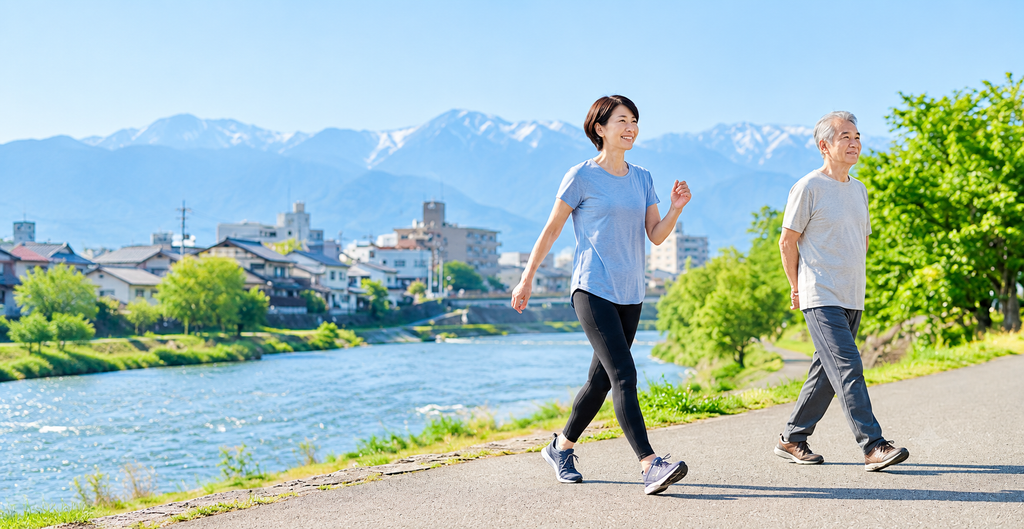
Exercise physiologists Hiroshi Nose and Shizue Masuki created it at Shinshu University in Matsumoto, Japan, as a practical way for middle-aged and older adults to get fitter without a gym.
The original protocol looks like this:
- Slow phase: 3 minutes at about 40% of your peak aerobic capacity
- Fast phase: 3 minutes at 70% or more of your peak aerobic capacity
- Sets: 5 or more rounds of slow plus fast
- Frequency: 4 or more days per week
That adds up to about 30 minutes of walking per session. In plain terms, you stroll comfortably for three minutes, then walk fast enough that talking gets hard, and repeat.
Many people describe it as a gentler cousin of HIIT. It borrows the interval idea from high-intensity training but stays easier on the body, since you never break into a run.
What Is Interval Walking, And How Is It Different From Regular Walking?
Interval walking means deliberately changing your pace in planned blocks instead of walking at one steady speed.
Regular walking usually settles into a comfortable, moderate rhythm and stays there.
That difference matters more than you might expect. In the 2007 Shinshu trial, researchers compared three groups: no training, steady moderate walking at about 50% of peak aerobic capacity, and interval walking training.
The interval group gained significantly more leg strength and aerobic capacity than the steady walkers and saw a bigger drop in resting systolic blood pressure.
Shinshu University’s later research explains why. In a study of 679 middle-aged and older adults, fitness gains and improvements in lifestyle-related disease markers tracked with total fast walking time each week, not with easy walking time or total walking time.
In other words, the brisk minutes do most of the work.
| Feature | Regular Walking | Japanese Walking (IWT) |
|---|---|---|
| Pace | One steady speed | Alternates fast and slow every 3 minutes |
| Session length | Varies | About 30 minutes |
| Intensity | Usually moderate | Fast phases at 70%+ of peak capacity |
| What drives results | Time and steps | Total fast walking time |
| Equipment | None | None (a timer helps) |
What Is Asian Walking, And Is It The Same Thing?
“Asian walking” is a phrase some people use when searching for this trend, but it isn’t the name of any specific method in the research.
When people search for it, they’re almost always looking for Japanese walking, the 3-minute fast and 3-minute slow interval routine from Shinshu University.
If you see a program called “Asian walking” that doesn’t follow the interval pattern, treat it as a different routine.
The scientific evidence described in this article applies to interval walking training specifically.
Does Japanese Walking Help You Lose Weight?
Yes, but the honest answer is “modestly, and mainly as part of a bigger plan.” Weight loss wasn’t the main focus of the original research.
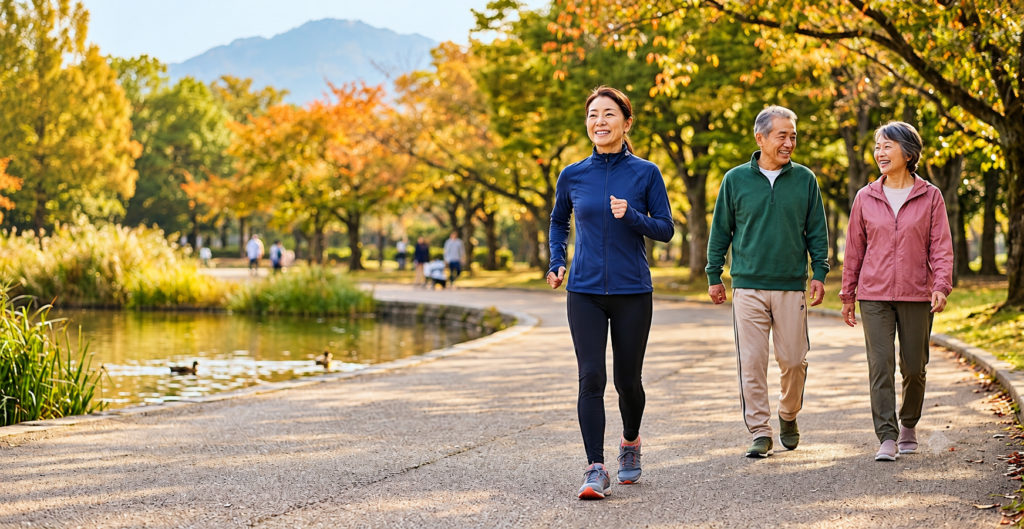
Fitness, strength, and blood pressure were. Still, several studies did measure body weight and fat.
- The large Shinshu group study. A study published in the British Journal of Sports Medicine followed 246 men and 580 women, around 65 years old, through about four months of interval walking. Body weight, BMI, body fat percentage, blood pressure, and blood glucose all decreased across groups, with the biggest changes in people who started out least fit.
- The Danish diabetes trial. A 2013 Diabetes Care trial in people with type 2 diabetes compared interval walking with continuous walking matched for energy expenditure. Body mass, fat mass, and visceral fat fell only in the interval group. At a medical conference, the lead researcher reported that interval walkers lost about 4 kg on average, while continuous walkers’ weight didn’t change.
That second study is especially interesting. Both walking groups burned roughly the same energy during training, yet only the interval walkers lost weight and fat.
Keep in mind it was a small study, with just 12 people in each walking group.
What this means for you:
- Japanese walking can help with weight and body fat, especially if you’re starting from a low fitness level.
- Results in studies were steady rather than dramatic.
- Diet still matters. No walking routine can outrun regular overeating. Small daily changes, like the ones in our article to losing weight without hitting the gym, make a real difference alongside your walks.
- The biggest proven benefits are fitness, leg strength, and blood pressure, which make it easier to stay active long term.
What Are The Proven Benefits Of The Japanese Walking Method?
Beyond weight, the Japanese walking method has a solid research record for an exercise trend. Here’s a summary of key findings:
| Study | Who | Length | Key Results |
|---|---|---|---|
| Nemoto et al., Mayo Clinic Proceedings (2007) | 246 adults, average age 63 | 5 months | Knee extension strength up 13%, knee flexion up 17%, aerobic capacity up 8% to 9%, bigger blood pressure drop than steady walking |
| Morikawa et al., British Journal of Sports Medicine (2011) | 666 analyzed adults, around 65 years old | About 4 months | Weight, BMI, body fat, blood pressure, and blood glucose all decreased |
| Karstoft et al., Diabetes Care (2013) | 32 adults with type 2 diabetes | 4 months | Aerobic fitness up about 16%, weight and fat fell only in the interval group, better blood sugar control |
| Masuki et al. (2019) | 679 adults, average age 65 | 5 months | Aerobic capacity up 14%, lifestyle-related disease score down 17% |
| Nose et al. review (2021) | More than 8,700 adults | 5 months | Aerobic capacity up 15%, disease symptoms improved 20%, healthcare costs down about 20% |
- Stronger Legs: The brisk phases push your thigh muscles harder than a casual stroll. Stronger legs make stairs, hills, and everyday movement easier, which matters more as you age.
- Better Heart And Lung Fitness: Peak aerobic capacity, often called VO2 peak, is a standard measure of cardiovascular fitness. Interval walking consistently raised it across studies, while steady walking at the same total time often didn’t.
- Lower Blood Pressure: Interval walkers in the 2007 trial saw a bigger drop in resting systolic blood pressure than steady walkers.
- Better Blood Sugar Control: In the Danish trial, glucose levels improved in the interval group, while the continuous walkers showed no change in blood sugar control.
- Lasting Habits: Shinshu University reported in 2016 that 109 of the 585 people who started its program in 2005, more than 18%, were still doing interval walking a full decade later. For an exercise program, that’s an impressive staying rate.
How Do You Do A Japanese Walking Workout?
You don’t need a lab test to try a Japanese walking workout. The researchers used precise aerobic capacity measurements, but you can get close using effort and breathing.
Step 1: Warm Up- Walk at an easy pace for a few minutes. Loosen your ankles, swing your arms, and let your breathing settle.
Step 2: Walk Slowly For 3 Minutes- This is your recovery pace. You should be able to chat in full sentences without effort. Think of the speed you’d use browsing shop windows.
Step 3: Walk Fast For 3 Minutes- Pick up the pace until it feels somewhat hard. You should be breathing heavily enough that you can only say a few words at a time. Swing your arms, take quicker steps, and stand tall.
Step 4: Repeat For 5 Rounds- Alternate slow and fast until you’ve completed five rounds. That’s 30 minutes of walking.
Step 5: Cool Down And Stretch- Finish with a few minutes of easy walking and some gentle calf, hamstring, and hip stretches.
| Phase | Time | How It Should Feel | Talk Test |
|---|---|---|---|
| Warm-up | 3 to 5 minutes | Very easy | Can chat freely |
| Slow interval | 3 minutes | Easy, relaxed | Full sentences |
| Fast interval | 3 minutes | Somewhat hard | A few words only |
| Repeat | 5 rounds total | Alternating | Alternating |
| Cool-down | 3 to 5 minutes | Very easy | Can chat freely |
Handy tools: a phone timer, a fitness watch with interval alerts, or a playlist that changes tempo every three minutes.
Shinshu researchers have even built smartphone and device-based systems to guide participants, which shows how central timing is to the method.
What Is A Good 4-Week Japanese Walking Plan For Beginners?
If you’re new to exercise, jumping straight into five full rounds four days a week can feel like a lot.
The original study supports that worry. In the 2007 trial, only 11 of 19 men and 31 of 68 women in the interval group fully met their training targets.
Building up gradually gives you a better shot at sticking with it.
| Week | Rounds Per Session | Session Length | Days Per Week | Focus |
|---|---|---|---|---|
| 1 | 3 rounds | About 18 minutes | 3 | Learn the rhythm and find your fast pace |
| 2 | 4 rounds | About 24 minutes | 3 to 4 | Make fast intervals feel genuinely brisk |
| 3 | 5 rounds | About 30 minutes | 4 | Hit the full research protocol |
| 4 | 5 rounds | About 30 minutes | 4 or more | Keep it steady and track progress |
Add warm-up and cool-down time to each session.
Sample weekly schedule (week 3 onward):
| Day | Activity |
|---|---|
| Monday | Japanese walking, 5 rounds |
| Tuesday | Rest or easy stroll |
| Wednesday | Japanese walking, 5 rounds |
| Thursday | Strength exercises or yoga |
| Friday | Japanese walking, 5 rounds |
| Saturday | Japanese walking, 5 rounds |
| Sunday | Rest |
Missed a day? Don’t panic. The Shinshu researchers found that even participants who didn’t hit every target still improved, and the key driver was total fast walking time across the week.
Can You Do Japanese Indoor Walking At Home?
Absolutely. Japanese indoor walking is a great option when it’s too hot, cold, rainy, or polluted outside, or when you simply don’t feel like leaving the house.
The research mostly involved outdoor walking in daily life, but the interval principle works anywhere you can safely change your pace.
Treadmill Japanese Walking: A treadmill is the easiest indoor setup.
- Slow phase: set a comfortable walking speed
- Fast phase: increase speed until the talk test says “a few words only”
- Option: use a slight incline during fast phases if raising speed feels awkward
Hold the handrails only for balance, not for support, so your legs do the work.
Walking In Place Or Around Your Home: No treadmill? Try these:
- Marching in place: easy marching for slow phases, fast high-knee marching with strong arm swings for fast phases
- Hallway laps: walk briskly down a long hallway and back during fast phases
- Stair intervals: climb stairs during fast phases if you’re steady on your feet, then walk on flat ground to recover
Mall Or Indoor Track Walking: Shopping malls and indoor tracks give you space to walk at full speed with even surfaces and climate control. Many open early for walkers.
| Indoor Option | Best For | Watch Out For |
|---|---|---|
| Treadmill | Precise speed control | Holding the rails too tightly |
| Marching in place | Small spaces | Not getting intense enough |
| Hallway laps | Apartments, offices | Tight turns slowing you down |
| Stairs | Extra leg strength | Balance and knee comfort |
| Mall or indoor track | Long, open walking | Opening hours |
How Does Japanese Walking Compare With Other Walking Trends?
Walking trends come and go quickly online. Here’s how Japanese walking stacks up against a few popular alternatives.
| Method | How It Works | Research Behind It | Best For |
|---|---|---|---|
| Japanese walking (IWT) | 3 min fast, 3 min slow, 5 rounds | Multiple trials since 2007, thousands of participants | Fitness, strength, blood pressure, modest weight loss |
| Steady brisk walking | One moderate pace | Widely studied general health benefits | Easy daily movement |
| 10,000 steps a day | Daily step goal | General step research, but the goal itself is a round number | Building overall activity |
| Incline treadmill walking | Steep incline at steady pace | Less specific research on named routines | Gym users wanting intensity |
| Running HIIT | Short all-out sprints with rest | Strong research, but harder on joints | Fitter people comfortable with running |
What sets the Japanese walking method apart is its combination of low impact and solid evidence. You get some of the benefits of interval training without the pounding of running.
What Mistakes Should You Avoid With Japanese Walking?
Small slip-ups can make interval walking much less effective. Watch for these:
Making the fast phase too easy. This is the most common mistake. If you can comfortably chat during fast intervals, you’re not going hard enough. Remember, the research found that fast walking time drives results.
Making the fast phase too hard. Going all-out in round one often leaves you exhausted by round three. Aim for “somewhat hard,” a level you can repeat five times.
Skipping slow phases. Recovery lets you hit the next fast interval properly. Don’t stop completely between fast phases unless you need to.
Expecting fast weight loss. Studies showed gradual changes over months, not dramatic results in a few weeks.
Ignoring food. Exercise helps, but for weight loss, your eating habits still play a major role. Your drinks count too, so if you’re unsure what drinks help you lose weight, start by swapping sugary beverages for lighter options.
Poor shoes. Supportive walking shoes reduce the risk of foot, knee, and hip discomfort, especially during brisk phases.
Giving up after a slow start. Many participants in the original trial didn’t hit every target, yet still improved. Consistency beats perfection.
Is Japanese Walking Safe For Everyone?
Japanese walking is low impact and was designed with middle-aged and older adults in mind, so it suits many people.
Still, the fast phases raise your heart rate significantly, so take sensible precautions.
Talk to your doctor first if you:
- Have heart disease, high blood pressure, or chest pain with activity
- Have diabetes, especially if you take insulin or medications that can lower blood sugar
- Have joint, hip, knee, or back problems
- Are pregnant or recovering from surgery or injury
- Have been inactive for a long time
Stop and seek help if you notice: chest pain or pressure, severe shortness of breath, dizziness, fainting, or an irregular heartbeat.
Smart safety habits:
- Walk in well-lit areas with even ground
- Stay hydrated, especially in hot weather
- Wear reflective gear when walking in low light
- Start with fewer rounds and build up
How Long Does Japanese Walking Take To Show Results?
Most research measured results after four to five months of training at least four days per week.
That’s a helpful benchmark for setting expectations. Here’s a realistic timeline many people can expect:
| Timeframe | What You Might Notice |
|---|---|
| Weeks 1 to 2 | Learning the rhythm, fast intervals feel challenging |
| Weeks 3 to 6 | Fast intervals feel more manageable, better stamina |
| Months 2 to 3 | Easier stairs and hills, possible small changes in weight or waist size |
| Months 4 to 5 | Measurable fitness and strength gains, as seen in studies |
| Beyond 5 months | Continued benefits if you keep going |
People who start out less fit often see the biggest improvements. In the British Journal of Sports Medicine study, participants with the lowest starting fitness had the greatest changes in weight, body fat, blood pressure, and blood sugar.
Is Japanese Walking Worth Trying For Weight Loss?
Japanese walking is one of the rare fitness trends with real science behind it.
The interval walking training method has nearly two decades of research showing gains in leg strength, aerobic fitness, blood pressure, and blood sugar control, along with modest drops in weight and body fat.
It’s free, low impact, and works indoors or out. Just keep your expectations grounded.
It isn’t a fast fat-loss trick. Think of it as a smarter way to walk that builds fitness over months, especially when combined with sensible eating.
Some people also pair it with a Japanese-inspired morning tonic, though the evidence behind supplements is far weaker than the research on interval walking.
Start with a few rounds, make the fast phases genuinely brisk, and aim for four sessions a week.
Your future self, climbing stairs without huffing, will thank you.
What Do People Ask Most About Japanese Walking?
What Is Japanese Walking In Simple Terms?
Japanese walking is a workout where you alternate 3 minutes of fast walking with 3 minutes of slow walking for about 30 minutes. Researchers at Shinshu University in Japan developed it and call it interval walking training. The recommended schedule is at least four sessions per week.
Does Japanese Walking Really Help With Weight Loss?
Japanese walking can support weight loss, but results in studies were modest and gradual. Research found decreases in body weight, BMI, and body fat after several months of training. Pairing it with healthy eating gives you the best chance of meaningful results.
How Many Days A Week Should You Do Japanese Walking?
Japanese walking works best at least four days a week, based on the original research protocol. Each session includes five rounds of 3 minutes fast and 3 minutes slow. Beginners can start with three days and fewer rounds.
How Fast Should You Walk During Japanese Walking?
Japanese walking’s fast phase should feel somewhat hard, where you can only say a few words at a time. The research used 70% or more of each person’s peak aerobic capacity. The slow phase should feel easy enough to talk in full sentences.
Can You Do Japanese Walking Indoors?
Japanese walking can be done indoors on a treadmill, around your home, or at a mall or indoor track. Use speed or incline on a treadmill, or fast marching in place, to create brisk intervals. The key is keeping the 3-minute fast and slow pattern.
Is Japanese Walking Better Than 10,000 Steps?
Japanese walking produced bigger fitness and strength gains than steady walking in head-to-head research. In the 2007 Shinshu study, interval walkers improved more than people doing moderate continuous walking. Hitting a step goal is still useful for general activity, but intensity matters more for fitness.
Is Japanese Walking Good For Older Adults?
Japanese walking was designed for and studied mainly in middle-aged and older adults. Participants in the key trials were often in their 60s, and they gained leg strength, aerobic fitness, and better blood pressure. Older adults with health conditions should check with a doctor before starting.
What Is Japanese Indoor Walking?
Japanese indoor walking is the same interval routine done inside, usually on a treadmill or in a hallway. It follows the 3-minute fast and 3-minute slow pattern without needing to go outdoors. It’s handy during bad weather or for people who prefer exercising at home.
Is Interval Walking Training The Same As Japanese Walking?
Japanese walking and interval walking training are the same method under different names. Interval walking training is the scientific term used by Shinshu University researchers. “Japanese walking” became the popular name after the routine spread on social media.
References
- Nemoto, K., Gen-no, H., Masuki, S., & Nose, H. (2007). Effects of high-intensity interval walking training on physical fitness and blood pressure in middle-aged and older people. Mayo Clinic Proceedings, 82(7), 803–811.
Supports the original 3-minute fast/3-minute slow interval walking protocol and findings on aerobic capacity, leg strength, and blood pressure. - Morikawa, M., et al. (2011). Effects of exercise training on health-related physical fitness and lifestyle-related diseases in middle-aged and older adults. British Journal of Sports Medicine.
Supports the findings on body weight, BMI, body fat, blood pressure, and blood glucose following interval walking training. - Karstoft, K., et al. (2013). The effects of interval- versus continuous-walking exercise on glycemic control in type 2 diabetes. Diabetes Care, 36(2), 228–236.
Supports the article’s discussion of interval walking, body composition, aerobic fitness, and blood-sugar control in people with type 2 diabetes. - Masuki, S., et al. (2019). Research from Shinshu University on interval walking training and lifestyle-related disease markers.
Supports the discussion of aerobic fitness and improvements in lifestyle-related disease measures among middle-aged and older adults. - Nose, H., et al. (2021). Review of interval walking training and its long-term use in community-based exercise programs.
Supports the article’s discussion of long-term adherence, fitness improvements, and health-related outcomes reported across large groups of participants. - Shinshu University, Institute of Health and Sports Science. Research and resources on Interval Walking Training (IWT).
Supports the practical 3-minute slow/3-minute fast protocol, recommended frequency, and development of technology-assisted interval walking programs.